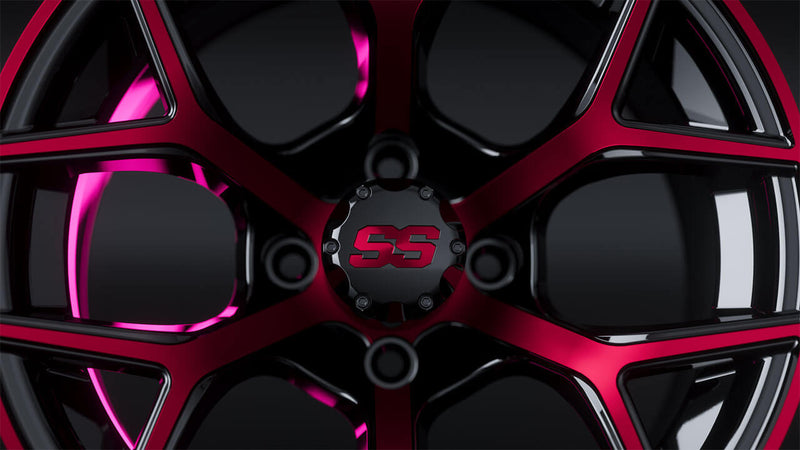
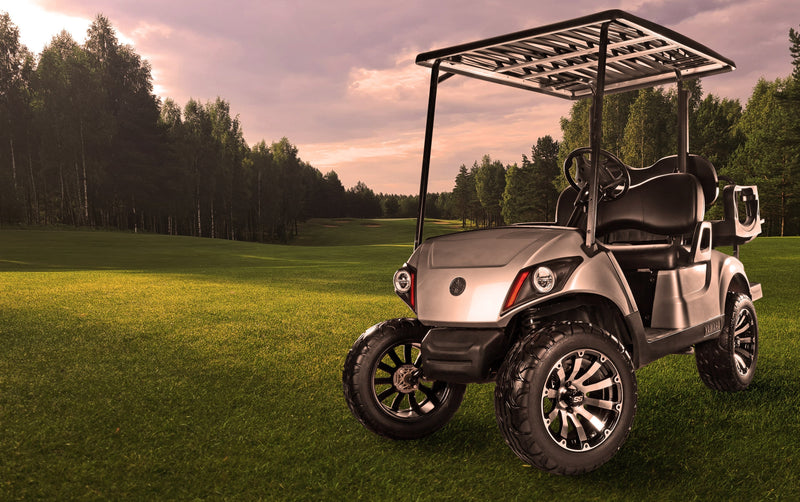
Upgrading wheels is the quickest way to change how your golf cart looks and feels. The off-season is perfect for getting the details right so spring driving feels better on day one. Here’s a straight, human guide from RM Cart on size, offset, hub fit, and lug seats, with zero fluff and plenty of real-world tips.
Wheel Size: How Diameter Affects Ride and Handling
Bigger wheels change two things at once: looks and sidewall height. As diameter goes up and you keep overall tire height similar, the tire’s sidewall gets shorter. Shorter sidewalls steer more precisely and reduce squirm, while taller sidewalls ride softer and soak up bumps.
How to decide:
- Mostly pavement: 12” wheels with low-profile tires tighten steering and feel composed
- Mixed routes: 10” or 12” with a moderate-profile tire balances comfort and control
- Lifted builds: confirm total tire height and fender clearance before you size up
Browse options: Wheels • Tire & Wheel Combos
Offset Explained: Centered vs Negative Offset
Offset is how far the wheel’s mounting surface sits from its centerline. It changes track width and how loaded your bearings and steering feel.
- Centered (0 ET): Mounting pad at the wheel centerline. Stock-like stance, predictable steering, less stress on components
- Negative Offset (e.g., −25 ET): Mounting pad closer to the inside lip. Wheel face sits farther out, widening stance and changing scrub radius
What you’ll feel:
A touch of negative offset gives a wider, planted look and can improve stability, but too much can add steering effort and fender rub. Small changes usually feel great; large changes need a careful clearance check at full lock and full compression.
Scrub Radius: The Invisible Force You Can Feel
Scrub radius is the distance between where your steering axis hits the ground and the center of the tire’s contact patch. Change offset or tire width and you change scrub radius.
- Small scrub radius: Light steering, better feedback on pavement
- Large scrub radius: Heavier steering, more kickback on bumps, great for slow-speed stability but tiring if overdone
Quick tip: If your cart feels “dirty” after a wheel change, revisit offset and verify toe alignment.
Hub Fit and Centering: Hub-Centric Vs Lug-Centric
Most golf cart wheels center on the lugs, not the hub. That is okay as long as you use the right lug nuts and torque correctly. If your hub bore and wheel bore do not match well, minor vibration can show up.
What to check:
- Hub bore: Ensure the wheel sits flat on the hub face with no interference
- Clean fit: Remove rust or corrosion from hub faces before install
- Torque pattern: Tighten in a star pattern, re-torque after the first short ride
Dialing in the details: Lug Nuts
Lug Seat Types: Match The Seat to the Wheel
The wrong lug seat type causes vibration, ovalized holes, or a wheel that never centers.
- 60° Taper (Acorn): Most common for many aftermarket aluminum wheels
- Mag/Flat Washer: Flat seat with a washer; common on certain styles
- Spherical/Ball Seat: Less common; only use if the wheel specifies it
Rule to live by: Match the lug seat to the wheel and the thread to your studs, then torque to spec. If the wheel includes lug nuts, use them. Most Club Car and E-Z-GO carts use 1/2 inch lugs, while Yamaha is typically metric, so confirm stud size before ordering and never force a mismatch.
Shop the details: Lug Nuts
Clearance, Spacers, and Real-World Fit Checks
Before you commit, cycle the steering from lock to lock and compress the suspension if you can. Look for contact at fenders, brake cables, and mud flaps.
- Minor stance tweak: Quality [Spacers] can restore clearance or symmetry
- Lifted carts: Confirm tire diameter, offset, and lift height together
- After install: Recheck at full lock with passengers and on uneven ground
Simple Upgrade Paths That Work
You do not need to reinvent the cart. Start with one of these and refine.
- Street-first: 12” wheel with low-profile tire for crisp steering and a clean, modern look
- Mixed-use: 12” wheel with a moderate-profile street or mild A/T tire for comfort and control
- Lifted stance: 12” wheel with A/T tire sized to your lift, plus a measured negative offset for stability
Ready to roll: Tire & Wheel Combos
Quick FAQ: Wheel Fitment, Answered
Will Negative Offset Hurt Bearings?
Mild negative offset is fine. Extreme offset increases leverage on bearings and steering parts. Keep changes reasonable and verify clearance.
Why Does My Cart Vibrate After A Wheel Swap?
Common causes are mismatched lug seats, uneven torque, or debris on the hub face. Match the lug seat, clean the hub, torque in a star pattern, and re-torque after the first ride.
Do I Need Spacers Or A Different Offset?
Use spacers to correct small stance issues or clear a caliper or spring. If you need a big change, choose wheels with the correct offset rather than stacking spacers.
Helpful Links to Finish the Job
- Choose your look and stance: Wheels
- Lock in safe, smooth installs: Lug Nuts
- Skip the guesswork with mounted sets: Tire & Wheel Combos
Got fitment questions or a unique build in mind? We are happy to help. Reach out on our Contact page and an RM Cart expert will make sure you get it right the first time.