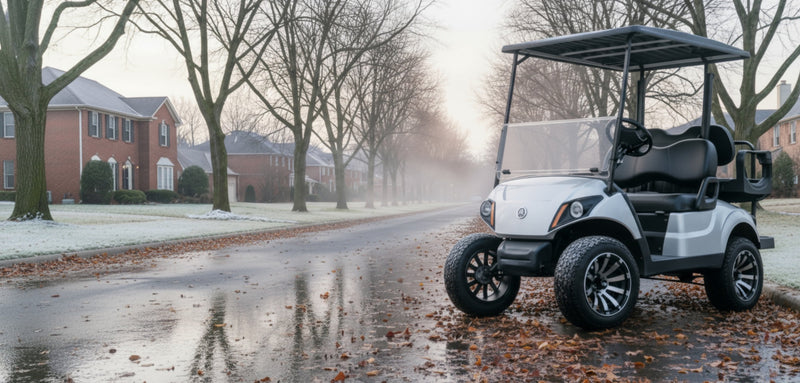
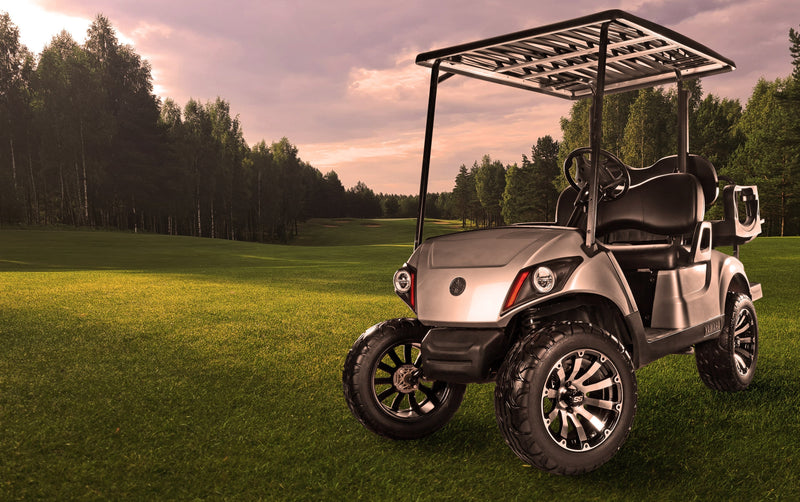
Spring riding is the best kind of riding, until the forecast changes mid-day. If you have ever left the house on a perfect afternoon and come back with wet seats, gritty floors, and a cart that suddenly feels a little sketchy on turns, you are not alone. A rain-ready setup is not about overbuilding or making your cart look bulky. It is about a few smart upgrades and habits that keep rides comfortable, protect the parts that take the most abuse, and help you feel confident when roads and paths go slick.
Below is a simple checklist you can use every spring. Read it once, then upgrade only what matches how and where you ride.
Spring Rain Can Hit Your Golf Cart Hard
Spring showers usually come with three things that can impact your rides:
- Slick pavement and wet grass that change traction fast
- Low-visibility moments like mist, dusk, and glare off wet roads
- Water and grit that creep into hardware, brakes, and electrical connections
The goal is simple. Keep traction predictable, keep visibility clear, and keep water from becoming a long-term problem.
1) Traction Comes First
If your cart feels floaty, slides easier, or takes a second longer to respond after a rain, your tires are often the reason. Spring is when you notice tire issues first because the ground changes constantly, from pavement to wet grass to muddy edges. A quick tire check now can make every ride feel more controlled.
Rain-ready tire checks:
- Look for cracking or dry rot from storage
- Confirm tread depth and watch for uneven wear
- Set PSI for current temps, then re-check after the first few rides
Upgrade tip: If you ride mixed surfaces in spring, a mild all-terrain style tire often feels more predictable on wet grass and gravel than a smooth turf-style tire.
Shop: Tires | Tire and Wheel Combos
2) Do a Brake Reality Check
Wet conditions expose weak brakes fast. If you notice extra stopping distance, squeal, or a pull to one side, that is your cart telling you it needs attention. A lot of people wait until something feels serious, but brakes are one of those areas where small fixes early can save bigger repairs later.
Quick brake checklist:
- Test braking at low speed in a safe area
- Listen for grinding or squeal that does not go away
- Inspect for loose hardware and worn components
Shop: Brake Parts
3) See and Be Seen
Rain changes how everything looks. Glare gets stronger, distances feel harder to judge, and a light mist can cut visibility more than you expect. The good news is that visibility upgrades are usually easy, and you feel the difference right away.
Windshield clarity matters
A windshield that is scratched, hazy, or loose can distort visibility in rain and turn glare into a distraction. If your windshield rattles, fogs up, or looks permanently cloudy, it is worth addressing now.
Do this:
- Tighten mounts so it does not rattle or shift
- Clean it regularly to remove pollen film and grit
Shop: Windshields
Lights are the easiest spring safety upgrade
Even if you do not ride at night, spring weather can turn a normal afternoon into low-visibility driving. Lights are also how other drivers and pedestrians understand what you are doing, especially in neighborhoods and campgrounds.
Rain-ready lighting basics:
- Make sure headlights and rear lights work consistently
- Check connections if you see flicker or dim output
- Upgrade when you want brighter, cleaner visibility
Shop: Light Kits | Light Accessories
4) Cut the Spray
Wet paths throw water and grit up into the cart, onto passengers, and into places that are annoying to clean and easy to corrode. Fender flares help cut that spray and keep the cart looking cleaner longer, especially if you run wider tires or you drive through puddles more often in spring.
When fender flares make sense:
- You upgraded tires or wheels and see more spray
- You ride on wet grass, gravel, or muddy edges
- You are tired of washing the cart after every drizzle
Shop: Fender Flares
5) Check Battery Cables and Connections
Spring moisture plus storage can lead to corrosion and weak connections. It can show up as random power issues, slow starts, or inconsistent performance, which is frustrating when you are finally ready to ride again. A quick look now helps you avoid those why is my cart acting weird moments later.
Quick battery connection refresh:
- Inspect cables for corrosion or stiffness
- Make sure connections are snug and clean
- Replace cables that look damaged or questionable
Shop: Battery Cables
Quick Rain-Ready Checklist
If you only do five things, do these:
☐ Check tire condition and set PSI for spring temps
☐ Remember that wet conditions demand better brakes, inspect and fix early
☐ Tighten and clean your windshield for clearer visibility
☐ Confirm lights work reliably before your first rainy week
☐ Add fender flares if spray and grit are becoming a problem
Quick FAQ: Rain and Golf Cart Prep
Do I need different tires for spring rain on a golf cart?
Not always, but tread and rubber condition matter. If your tires are worn, cracked, or slipping on wet grass, upgrading to a tire with better tread can improve traction and confidence fast.
What is the most important upgrade for golf cart safety in rainy weather?
Visibility. A clean windshield and reliable lights help you see hazards sooner and help others see you clearly, especially in mist and low light.
How do I prevent corrosion on a golf cart after riding in the rain?
Rinse off mud and grit, let the cart dry, and check battery cables and key hardware points for early corrosion. Catching it early is the easiest way to prevent bigger issues.