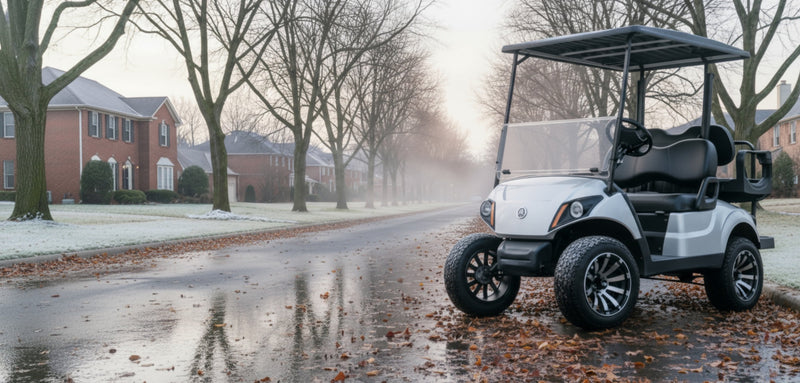
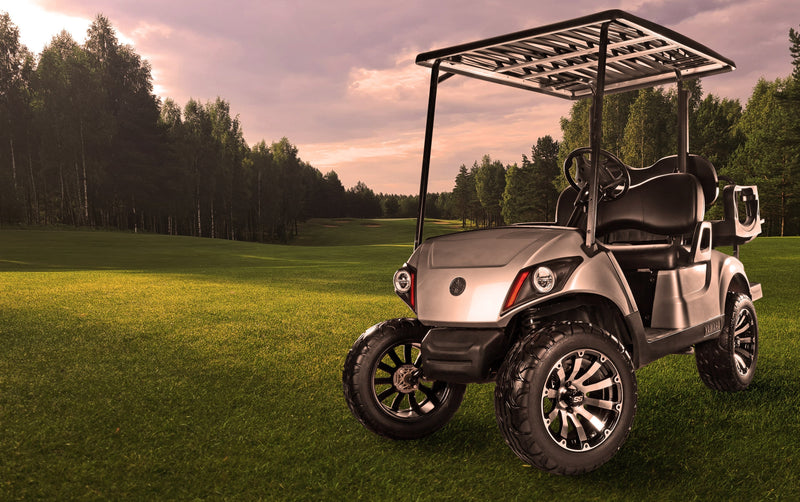
Summer is prime golf cart season. Longer days, warmer evenings, campground loops, lake weekends, neighborhood rides, and quick errands all give your cart more time to do what it does best.
And when the pavement heats up, a little attention to your tires and brakes can go a long way.
Most carts handle summer riding just fine. But hot pavement can change how tires grip, flex, wear, and feel. It can also make small brake or pressure issues easier to notice, especially during longer rides, full-cart family cruises, or stop-and-go summer routes.
The goal is simple: keep the good rides going. A few quick checks can help protect your tires, support predictable braking, and keep your cart feeling smooth, steady, and ready for every “one more lap” moment.
Why Hot Pavement Matters for Golf Cart Tires
Golf cart tires deal with more heat in summer because pavement holds and radiates warmth long after the air temperature rises. That heat can build in the tire as you ride, especially during longer loops, stop-and-go cruising, and full-cart family rides.
- Hot pavement can contribute to:
- faster tread wear
- sidewall cracking or dry rot showing up sooner
- reduced grip on dusty or slick surfaces
- more rolling resistance if PSI is low
- a rougher ride feel
- extra heat around the wheels if brakes are dragging
That does not mean summer riding is hard on your cart. It just means summer is the perfect time to keep the basics dialed in.
Low PSI Makes Tires Work Harder
Low tire pressure is one of the easiest summer tire issues to miss. When PSI is too low, the tire flexes more as it rolls. More flex creates more heat, and over time, that can lead to faster wear.
It can also make the cart feel heavier, slower, or less responsive than usual.
Watch for:
- steering that feels heavier than usual
- a cart that feels draggy on flat ground
- sidewalls that look slightly bulged
- uneven wear near the tire edges
- shorter range on electric carts
Quick fix:
Check tire pressure when the tires are cold, before riding. Set PSI to the tire’s recommended range and recheck during hot weeks or before longer rides. It is a small habit that can make the whole ride feel better.
Shop: Tires | Tire and Wheel Combos
Overinflation Is Not the Answer Either
If low PSI creates problems, it can be tempting to add extra air and call it good. But too much pressure can create a different issue.
Overinflated tires have a smaller contact patch, which can make the cart feel bouncy, harsh, or less settled on the road. On hot pavement, that can make the ride feel less comfortable and less predictable.
Watch for:
- a rough, bouncy ride
- tires wearing more in the center
- less grip on uneven pavement
- a cart that feels skittish in turns
Quick fix:
Stay within the recommended PSI range. The goal is balanced pressure, not maximum pressure. When PSI is right, the cart simply feels better.
Good Tread Helps Summer Rides Feel More Confident
Summer riding often means warm pavement, dusty paths, quick rain showers, loose gravel, and more people on board. Good tread helps your cart handle those conditions with more confidence.
Worn tires can still roll, but fresh, properly matched tires can make the ride feel smoother, quieter, and more stable.
This matters for neighborhood cruising, resort paths, campground loops, golf course paths, and street-legal errands.
Watch for:
- shallow tread depth
- uneven wear from alignment or pressure issues
- slipping on dusty pavement or wet grass
- a louder ride than normal
- cracks, chunks, or flat spots
Quick fix:
Inspect tread before peak summer use. If the tires are worn, cracked, or not matched to how you ride, replacement can make the cart feel more stable, more comfortable, and more ready for the season.
Shop: Tires | Tire and Wheel Combos
Brake Drag Can Make the Cart Work Harder
Hot pavement adds heat from the outside. Brake drag can add heat near the wheel.
If a brake is sticking even slightly, it can create extra heat, increase rolling resistance, and make the cart feel like it is working harder than usual. The good news is that brake drag often gives you a few clues before it becomes a bigger issue.
Signs of brake drag:
- the cart does not coast as freely
- one wheel area feels warmer than the others
- squealing, rubbing, or grinding
- the cart feels sluggish even with proper PSI
- shorter range or more frequent charging
Quick check:
After a short ride, carefully compare heat near each wheel area. If one feels noticeably warmer, brake drag could be part of the issue. Safely lifting each wheel and spinning it by hand can also help identify resistance.
A quick brake check can help keep your cart rolling easier and stopping more predictably.
Shop: Brake Parts
More Passengers Means More Summer Fun
Summer cart season usually means more people on board. Family rides, campground loops, lake weekends, and quick errands all add weight.
That is part of the fun. It just means your tires and brakes have a little more to manage.
Watch for:
- slower takeoff with passengers
- longer stopping distance
- tires looking low under load
- brakes feeling softer after repeated stops
- the cart feeling less stable in turns
Quick fix:
Check tire pressure more often when carrying passengers regularly. Test brakes at low speed before a longer ride, especially if the cart will be fully loaded. A little prep helps everyone enjoy the ride.
Shop: Tires | Brake Parts
Tire Type Makes a Difference in Summer
Not all golf cart tires are built for the same kind of summer riding. A smooth street tire may feel quiet and efficient on pavement but may not grip as well on dusty or loose surfaces. An all-terrain tire may provide better traction on gravel or dirt, but it can add more noise or rolling resistance on pavement.
The best choice depends on where your cart spends the most time.
Match the tire to the ride:
- Mostly pavement: street-friendly tread for smoother, quieter cruising
- Mixed use: moderate tread for pavement, grass, gravel, and campground roads
- Trail or property use: all-terrain tread for better grip on dirt and loose ground
Quick tip:
The best tire is not always the biggest or most aggressive. It is the one that fits your cart, your route, and your usual load.
Shop: Tires | Tire and Wheel Combos
Summer Is a Great Time to Catch Small Tire Issues Early
A tire with minor cracking, low PSI, uneven wear, or older rubber may be easy to overlook in cooler months. Add warmer pavement, longer rides, more passengers, and more frequent use, and those small issues can become easier to notice.
That makes summer a great time for a quick tire check.
Keep an eye on:
- visible sidewall cracking
- flat spots from storage
- uneven tread wear
- vibration that gets worse with speed
- repeated pressure loss
- tires that look dry, stiff, or aged
Quick fix:
Replace tires that show damage or repeated pressure issues. Tires affect steering, braking, comfort, and range, so keeping them in good shape helps the whole cart feel better.
Quick Hot-Pavement Tire Checklist
Before the hottest part of the season, run through this list:
- Check PSI when tires are cold
- Inspect tread depth and wear pattern
- Look for cracks, flat spots, or dry rot
- Test for vibration at low and moderate speeds
- Check for brake drag or unusual wheel heat
- Recheck pressure after big temperature swings
- Replace worn or damaged tires before longer rides
A five-minute check can help keep your tires, brakes, and weekend plans in good shape.
When to Replace Tires Instead of Adjusting PSI
Pressure helps only when the tire itself is still in good shape. If the tire is cracked, worn, uneven, or losing air, adjusting PSI may not solve the real issue.
Replace tires when you see:
- exposed or nearly gone tread
- deep cracks in the sidewall
- frequent air loss
- uneven wear that keeps returning
- vibration that does not improve after checks
- damage from gravel, debris, or curb hits
If the tire affects steering, stopping, or stability, it is worth handling early so the cart keeps feeling right.
Best Summer Tire and Brake Upgrades by Use
For Neighborhood Cruising
Focus on smoother ride feel, predictable braking, and clean tread wear.
Shop: Tires | Tire and Wheel Combos | Brake Parts
For Campground Loops
Focus on mixed-surface traction, braking control, and durability.
Shop: Tires | Tire and Wheel Combos | Brake Parts
For Lake and Vacation Communities
Focus on warm pavement, stop-and-go riding, and visibility around pedestrians.
Shop: Tires | Brake Parts
For Trail and Property Use
Focus on traction, sidewall durability, and brake confidence on loose ground.
Shop: All-Terrain Tires | Tire and Wheel Combos | Brake Parts
FAQ: Hot Pavement and Golf Cart Tires
Does hot pavement really make golf cart tires wear faster?
Yes. Hot pavement can increase tire temperature, and heat can speed up wear, especially if the tires are underinflated, overloaded, already cracked, or worn unevenly.
Why does my golf cart feel sluggish on hot pavement?
Low tire pressure, brake drag, and worn tires can all make a golf cart feel slower in hot weather. Heat can increase rolling resistance when tires or brakes are already under stress.
How often should I check golf cart tire pressure in summer?
Check tire pressure at least weekly during hot months, before longer rides, and anytime the cart feels heavy, squirmy, rough, or less responsive than usual.
Final Thought
Hot pavement is part of summer riding, and a little preparation goes a long way. Keep tire pressure in range, watch for brake drag, inspect tread often, and replace worn tires before they start affecting comfort, range, or stopping confidence.
Get the basics right, and your cart will feel smoother, steadier, and ready for every sunny-day ride.