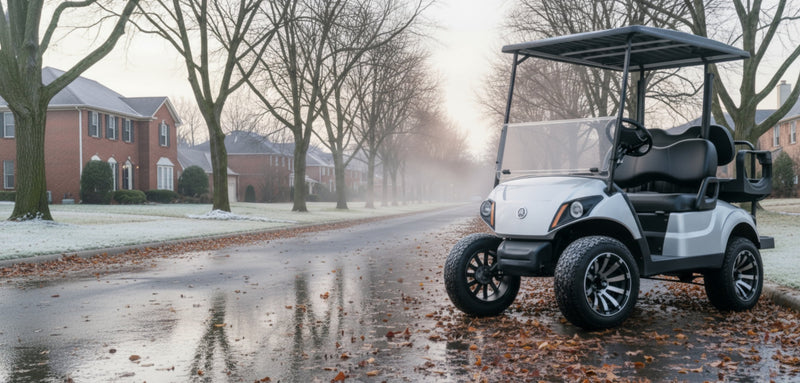
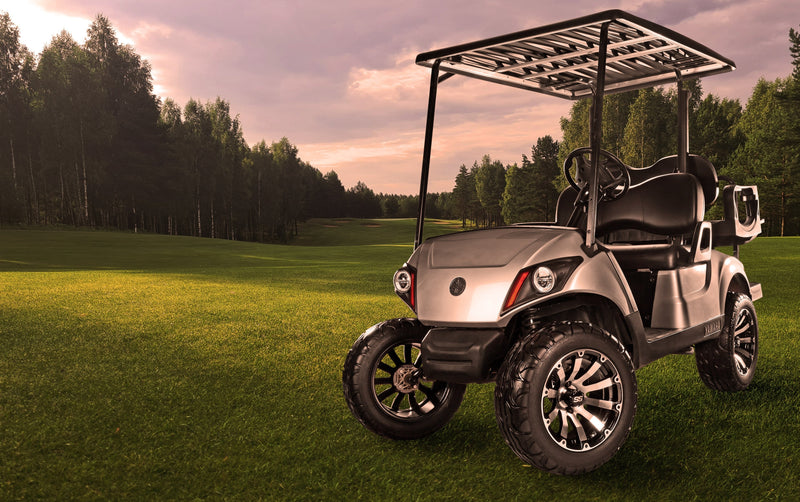
There is something pretty great about turning the golf cart into your go-to neighborhood ride.
But before you start adding parts, start with one important question:
Where do you actually want to drive it?
Street-use requirements vary by state and community, and a conventional golf cart is not necessarily the same thing as a federally defined Low-Speed Vehicle, or LSV. Adding accessories alone does not automatically change that classification.
So check your local requirements first. Then you can start building a cart that makes sense for where and how you ride.
What Does a Street-Ready Golf Cart Need?
For enthusiasts preparing a cart for permitted street or community use, the shopping list commonly starts with lighting, turn signals, mirrors, a proper windshield, seat belts, reflectors, and appropriate tires.
Federally regulated LSVs have additional requirements under FMVSS 500, including headlamps, front and rear turn signals, taillamps, stop lamps, reflectors, mirrors, a parking brake, compliant windshield glazing, seat belts, and a VIN.
Think of that as a useful reference point, not a universal conversion checklist. Your local requirements and vehicle classification ultimately determine what applies to your cart.
1. Start With Lights You Can Count On
If your cart is going to share permitted roads with other vehicles, seeing and being seen matters.
Check your setup for:
- Headlights
- Taillights
- Brake lights
- Turn signals
If your cart is missing something, a compatible light or turn-signal kit can be one of the most useful places to start.
Shop: Light Kits | Light Accessories
2. Give Yourself a Better View
Mirrors are a small upgrade that can make a big difference when you start using your cart beyond the course.
Depending on your setup and applicable requirements, that may include a driver’s-side mirror along with a passenger-side or interior rearview mirror.
Position them so you have useful visibility without constantly shifting around in the seat.
Shop: Golf Cart Mirrors
3. Choose the Right Windshield
A windshield can add comfort and protection from wind and debris, but if you’re building toward street use, the material matters too.
Federal LSV requirements specify compliant safety glazing for the windshield. NHTSA states that qualifying
LSVs must use windshield glazing that meets applicable FMVSS No. 205 requirements.
That makes this an upgrade worth getting right the first time.
Shop: Windshields
Always confirm the windshield fits your specific make, model, and application and meets the requirements applicable to your vehicle and location.
4. Don’t Forget What Meets the Road
Your tires deserve more attention than simply choosing the tread pattern that looks best.
Consider where you actually drive. A cart spending most of its time on pavement has different needs from one regularly traveling across grass, gravel, or campground roads.
Check:
Size. Fitment. Condition. Pressure. Intended use.
And if new wheels are part of the plan, confirm wheel size, bolt pattern, offset, lug hardware, and clearance before ordering.
Shop: Golf Cart Tires | Wheels | Tire & Wheel Combos
5. Think About Everyone Riding With You
Street-ready should not mean “looks ready from the outside.”
Think about the people in the seats too.
Check your seat belts, seating, brakes, steering, suspension, and parking brake. If something feels loose, worn, or questionable, address it before adding cosmetic upgrades.
A sharp set of wheels can wait. Brakes shouldn’t.
6. Do the Boring Part: Check Your Local Rules
We promise it is worth the five minutes.
Golf cart and LSV laws can vary considerably by location. States and local governments may establish requirements around registration, insurance, licensing, permitted roads, operating hours, and required equipment. NHTSA specifically notes that state and local governments regulate many operational requirements.
Check your state and local regulations as well as HOA or community rules before heading onto public streets.
A Quick Street-Ready Cart Checklist
Before your first road-going ride where permitted, check:
✅ Lights and signals
✅ Mirrors
✅ Windshield
✅ Tires and pressure
✅ Seat belts
✅ Brakes and parking brake
✅ Steering
✅ Local requirements
Then take a slow test ride and make sure everything works the way it should.
Street-Ready Golf Cart FAQ
Can I make any golf cart street legal?
Not necessarily. Vehicle classifications and requirements vary, and simply installing street-use equipment does not automatically make a conventional golf cart a federally compliant LSV.
Does a street-ready golf cart need a windshield?
Requirements depend on your vehicle and location. Federally defined LSVs must have a windshield using compliant safety glazing.
What should I upgrade first?
Start with the equipment that affects visibility and operation: lights, signals, mirrors, windshield, tires, seat belts, brakes, and steering. Then move on to the fun stuff.
How do I know which parts fit my cart?
Know your make, model, year, current tire and wheel sizes, and whether your cart has been lifted or otherwise modified. Always verify product fitment before ordering.
Build It for Where You Ride
A street-ready build does not have to happen all at once.
Start with the requirements. Get the fundamentals right. Then add the comfort, style, and personality that make the cart yours.
Because once the practical stuff is handled, building it is half the fun.
Shop RM Cart: Windshields | Lights | Mirrors | Tire & Wheel Combos | Seats