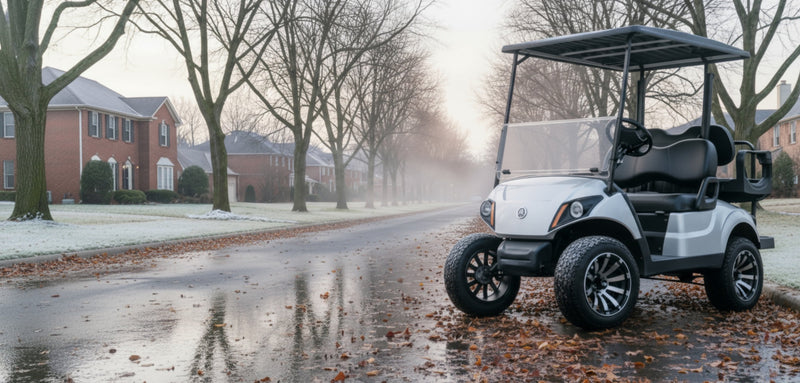
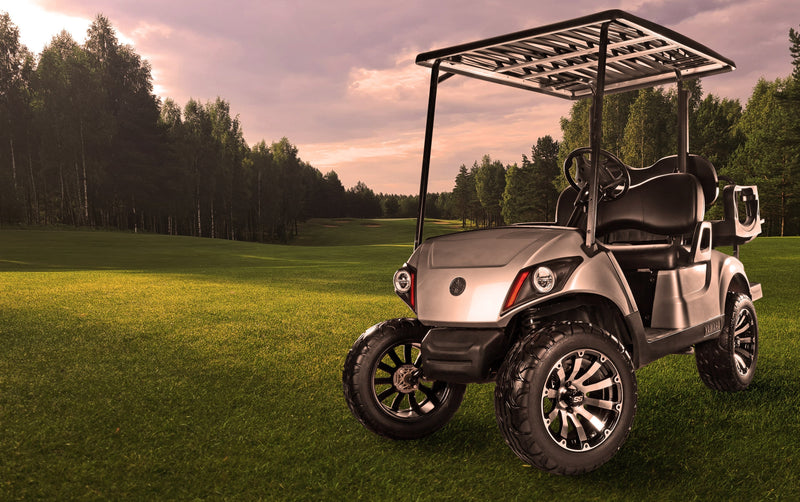
New tires or wheels can change your cart in one move.
They can improve the ride, add traction, refresh the look, or give the cart a stronger stance. Before you order, though, a few smart questions can save time and help you get the right setup the first time.
What Should You Know Before Buying Golf Cart Tires or Wheels?
Start with the basics:
- Your cart’s make, model, and year
- Your current tire and wheel size
- Whether the cart is stock or lifted
- Where you ride most often
- Whether you need tires, wheels, or a mounted combo
The right setup should fit correctly, clear the cart while turning, and match how you actually use it.
Shop: Tires | Wheels | Tire and Wheel Combos
What Do You Want to Improve?
Knowing your goal makes shopping much easier.
Are you looking for:
- A smoother neighborhood ride?
- Better grip on grass or gravel?
- A bolder stance?
- A fresh new look?
- Larger tires?
- A simple replacement for worn parts?
Start with the change that matters most, then choose the tire or wheel setup that supports it.
Do Your Tires Need Replacing?
Tread is only part of the story.
Look for:
- Cracks or dry rubber
- Bulges, cuts, or flat spots
- Frequent pressure loss
- Uneven wear
- Vibration
- Reduced traction
- A rougher or louder ride
If the rubber looks damaged or unreliable, replacing the tires can make the cart feel noticeably better.
Tires, Wheels, or Both?
Choose tires when the wheels are still in good shape but the tread or tire style needs an update.
Choose wheels when the tires still work but the wheels are damaged, corroded, or no longer fit the look you want.
Choose a tire and wheel combo when you want a complete visual change or an easier, ready-to-install option.
Mounted combos arrive assembled, which can make the upgrade much simpler.
Shop: Tire and Wheel Combos
Will the New Setup Fit?
Fitment matters more than appearance.
Confirm:
- Tire size
- Wheel diameter and width
- Bolt pattern
- Wheel offset
- Lug nut thread and seat style
- Stock or lifted ride height
Larger tires may rub when turning, carrying passengers, or driving over bumps. Some setups need a lift kit for proper clearance.
Shop: Tires | Wheels | Lift Kits
Match the Tire to the Ride
Choose tread based on where you actually drive.
Mostly pavement
Street-friendly tires usually offer a smoother, quieter ride.
Pavement, grass, and gravel
A moderate all-terrain tire adds grip while staying comfortable for everyday cruising.
Trails and property paths
A more aggressive all-terrain tire can help on dirt, loose ground, and uneven surfaces.
The best tire is not always the biggest one. It is the one that makes your usual rides better.
Shop: A/T Tires
Common Mistakes to Avoid
Buying by looks alone
A wheel can look perfect and still have the wrong bolt pattern, offset, or lug seat.
Better move: Confirm fitment before ordering.
Assuming bigger is always better
Larger tires may require a lift kit and can change steering or ride feel.
Better move: Match tire size to the cart and terrain.
Using the wrong lug nuts
The thread may fit even when the seat style does not.
Better move: Match both the thread and lug seat to the wheel.
Skipping the clearance check
A tire may clear while parked but rub during turns or with passengers.
Better move: Check full steering movement before regular use.
Can You Install Them Safely?
Many owners can replace complete mounted assemblies with the right tools and basic mechanical experience.
You will typically need:
- A properly rated jack
- Jack stands
- Wheel chocks
- The correct socket
- A torque wrench
- A tire pressure gauge
Never rely on a jack alone to support the cart.
For loose tire mounting, damaged hardware, or uncertain fitment, a tire or golf cart shop is the smart call.
What Should You Check After Installation?
Before the first full ride, check:
- Tire pressure
- Lug nut torque
- Full-turn clearance
- Steering and brake feel
- Rubbing or vibration
- Whether each wheel sits flush
Take a short, slow test ride, then recheck the hardware as recommended.
Quick Decision Guide
Want a smoother ride?
Start with street-friendly tires or a mounted combo.
Want better grip?
Choose all-terrain tires.
Want a bigger visual change?
Start with wheels or tire and wheel combos.
Want larger tires?
Confirm clearance and whether a lift kit is needed.
Want the simplest option?
Choose a compatible mounted tire and wheel combo.
FAQ: Golf Cart Tires and Wheels
How do I know which tires fit my golf cart?
Confirm the cart’s make, model, year, current tire size, wheel size, bolt pattern, offset, and whether it is stock or lifted.
Are tire and wheel combos easier?
Yes. Mounted combos arrive assembled and can simplify installation, but you still need to confirm fitment.
Do larger tires require a lift kit?
Sometimes. Larger tires may need extra clearance to prevent rubbing, especially during turns or with passengers.
Should I replace all four tires together?
Usually, if they are similar in age and wear. A matching set helps maintain consistent handling, traction, and appearance.
Final Thought
New tires or wheels should be a fun upgrade.
Know what you want to improve, confirm the fit, and choose a setup that matches where you ride.
Then step back, admire the difference, and take the cart out for one more lap.
Shop: Tires | Wheels | Tire and Wheel Combos | Lift Kits